
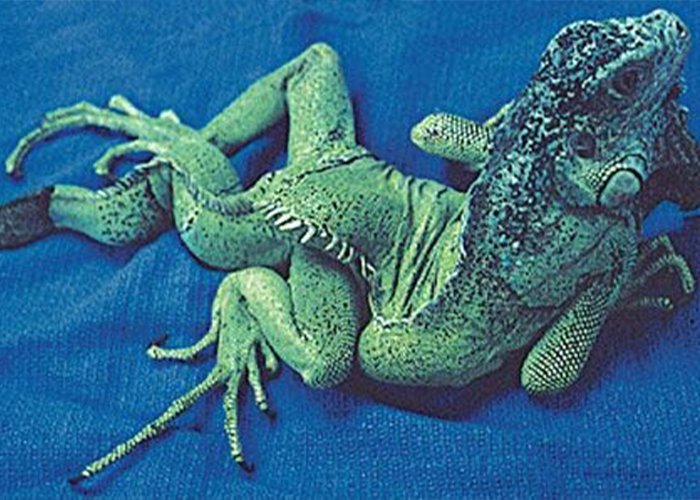
Metabolic bone disease is a disease that often attacks iguanas and turtles, it is rarely found in snakes or lizards because food intake is sufficient for the body's calcium needs. Where metabolic bone disease itself is a condition or situation where the calcium mineral metabolism process in the body is disrupted. Most metabolic bone diseases attack reptiles that need sunlight, while iguanas themselves, as reptiles, need sunlight to produce vitamin D3.
Iguanas that are fed foods low in calcium, high in oxalate, and high in phosphate may be at risk and reptiles that are rarely exposed to sunlight. Most cases of MBD (metabolic bone disease) attack young iguanas. However, in cases of kidney damage, which is a common problem in older iguanas, it is caused by improper feeding. When that happens, it causes a condition called gout and renal secondary hyperparathyroidism which can be contributing factors to MBD. This problem causes increased levels of phosphorus in the animal's blood which also contributes to MBD.
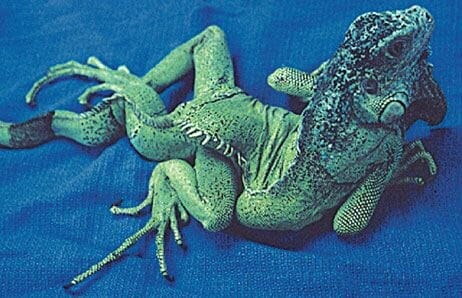
The most common causes of metabolic bone disease (MBD) in reptiles are inadequate ultraviolet light, inadequate dietary calcium, inappropriate calcium to phosphorus ratios, and inadequate temperature conditions. In some cases, late treatment results in death or the iguana survives leaving permanent disabilities in the form of bones or abnormal body shape. Proper food for iguanas, providing UVB lights and sufficient drying time for iguanas are the right steps before our iguanas get a case of metabolic bone disease (MBD).
The best treatment in cases of metabolic bone disease is prevention, which is why it is rare for iguanas to survive that have been affected by metabolic bone disease. The iguanas that survive metabolic bone disease are left with physical disabilities. Preventive measures start from a young age or with young iguanas. Preventive steps that we can take to prevent calcium deficiency in our iguanas are by providing UVB light in the cage in the form of a lamp and and frequently exposing the pet reptile to the sun.
Basking reptiles can be done several times a week, each time for 15 or 20 minutes in the sun before 10 noon. We can add supplements in the form of calcium powder to our iguana feed. This method is recommended only for young iguanas or young iguanas, because it is feared that giving additional calcium to adult iguanas could trigger other diseases that are dangerous for the iguana itself.
Some of the symptoms that often appear in iguanas affected by metabolic bone disease (MBD) include:
• swelling of the legs occurs and the legs are bent
• jaw swells and softens
• incoordination of movements
• looks paralyzed, such as having difficulty standing or climbing
• convulsions or shaking all over the body
• loss of appetite and accompanying weight loss
• Lumps were found on the spine
• abnormal bone structure
• Difficulty defecating (constipation)
Doneley, B., Monks, D., Carmel, C., & Johnson, R. (2017). Reptile medicine and surgery in clinical practice, 185-195.