

In this era of globalization, many people keep pets, one of which is cats. Cats are popular animals and are widely kept in various developed countries. Cats have been a part of human life for thousands of years. One animal that has received attention for maintenance and breeding is cats. Cats have their own charm because of their various body shapes, eyes and fur colors. With these advantages, cats can be bred and cultivated (Mariandayani, 2012). With so many people keeping cats, people's awareness of cat health is also increasing. This is due to the emergence of various diseases in cats, one of which has clinical symptoms, namely anemia. Anemia is characterized by lethargy, mental changes, increased respiratory effort, pale mucous membranes, increased heart rate and laboratory tests (when PCV is less than 31%, Hgb is less than 10.9 g/dL, and RBC is less than 6.9 mill/uL (Loftus et al, 2019). Anemia is a condition where the hemoglobin (Hb) level in the blood is lower than normal values (Roosleyn, 2016).
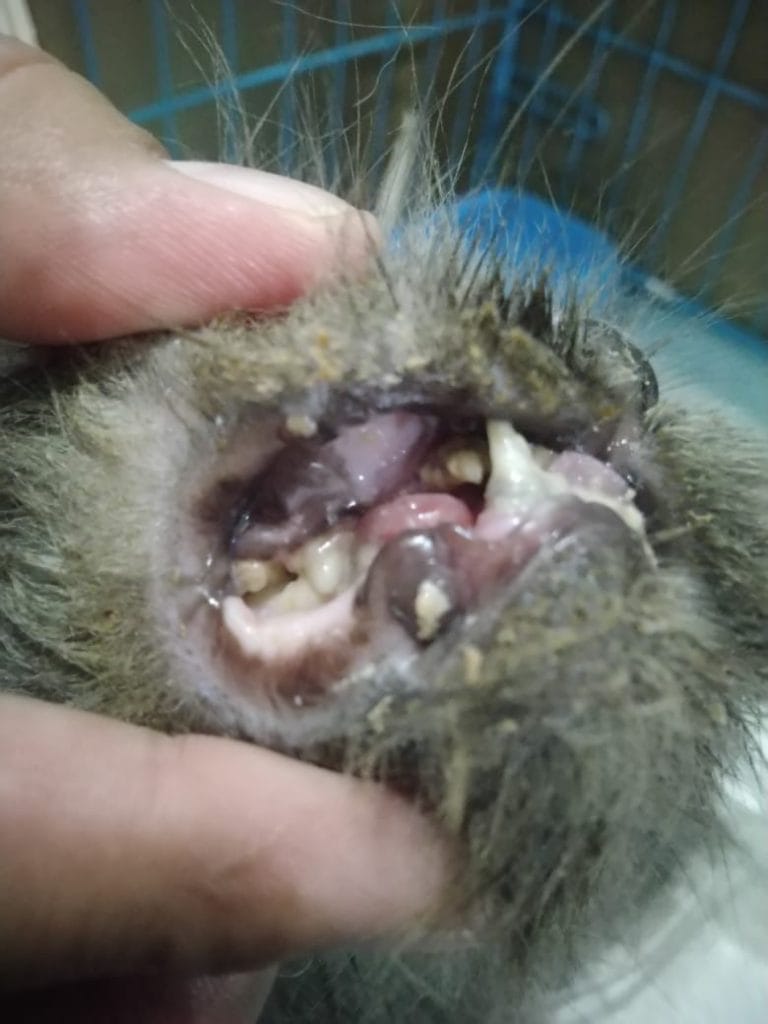
The cause of anemia can be nutritional factors related to protein, vitamin and mineral deficiencies, while non-nutritional factors are related to infectious diseases. Protein plays a role in the process of forming hemoglobin, when the body lacks protein for a long time the formation of red blood cells can be disrupted and this causes symptoms of anemia, while the vitamin associated with iron deficiency is vitamin C which can help speed up the absorption of iron in the body and play a role in moving iron into the blood, mobilizing iron stores, especially hemosiderin and the spleen (Masthalina et al, 2015).
Anemia is also reported to occur in a number of infectious diseases – particularly feline immuno-deficiency virus (FIV) and feline leukemia virus (FeLV) infections, and feline infectious peritonitis (Shelton and Linenberger, 1995; Shelton et al, 1995; Norris et al 2005 in Barfield and Adamantos, 2011). In addition, infectious organisms associated with anemia have also been reported including Bartonella species (causing transient anemia), Erlichia species, Neoricketsia risticii, Anaplasma phagocytophilum, Cytauxzoon felis and Rickettsia felis (Sykes 2010; Guptill 2010 in Barfield and Adamantos, 2011).
Anemia is classified by marrow response into two, namely regenerative anemia and non-regenerative anemia. Regenerative anemia is a condition where cats are affected by anemia with immature erythrocyte cells (immature erythrocytes) as seen mainly in response to blood loss or hemolysis, rarely associated with erythroid neoplasia in cats. Meanwhile, non-regenerative anemia is an anemia where there are no immature erythrocytes. Because when the body loses a lot of blood and the bone marrow cannot produce new erythrocytes anymore.
Classification of anemia based on morphology must be seen by laboratory examination because it requires knowing the MCV and MCHC. Hypochromic macrocytic anemia is when the MCV rises and the MCHC falls during a regenerative response after blood loss or hemolysis. Normochromic macrocytic when MCV is elevated and MCHC is normal such as blood loss or hemolysis and the occurrence of FeLV disease. Microcytic hypochromic when MCV and MCHC fall when iron and B6 are deficient. Normochromic microcytic when the MCV is low and the MCHC is normal occurs when there is iron deficiency and liver failure. Normoytichypochromic when the MCV is normal and the MCHC is low is usually rarely seen.
Disorders that cause nonregenerative anemia are infectious (especially chronic) inflammatory diseases such as bacteria, fungi, viruses, protozoa and parasites (fleas, mites and ticks) and non-infectious. Kidney disease (chronic) which is caused by the marrow not forming properly or failure in the development of the marrow, for example myelitis, toxicosis which can cause anemia.
Anemia is dangerous if several organ functions fail at the same time and an accident causes severe bleeding in the cat, then this is a very dangerous anemia condition. In kittens (kittens) fleas and ticks can cause anemia which can be fatal. Because the large number of fleas or ticks will cause a lot of blood to be absorbed, but inversely the production of red blood is limited because the animal is still young.
In surgical, medical and critically ill patients, blood transfusion should be performed as the first therapeutic option for the treatment of acute anemia, especially when experiencing traumatic, acute blood loss, or when the patient has limited compensatory mechanisms in response. Supportive care by providing food with the right nutrition to prevent iron or vitamin B6 deficiency. Parasite management must also be considered. Laboratory examination is also needed to determine whether the cat's condition is anemia or not.
Barfield, D and Sophie, A. 2011. Feline Blood Transfusions : A Pinker Shade of Pale. J. of Feline Medicine and Surgery. 13:11
Guptill LF. Feline bartonella. In: Ettinger SJ, Feldman EC, eds. Textbook of veterinary internal medicine. 7th edn: Oxford, Saunders; Elsevier, 2010: 896–900.
Loftus, John P. DeRosa, Sage. Struble, Angela M. Fandolph, John F. Wakshlag. 2019. One-year study evaluating the efficacy of an iodine-restricted diet for the treatment of moderate-to-severe hyperthyroidism in cats. Ithaca: Dove press
Mariandayani, H.N. 2012. Diversity of domestic cats (Felis domesticus) Based on Morphogenetics. Sriwijaya Animal Husbandry Journal Vol 1 no 1. Pg. 10,11,3.
Masthalina, H et al. 2015. Consumption patterns (Fe inhibitor and enhancer factors) on the anemia status of adolescent girls. J. Pack. 11(1). 80-86
Roosleyn, IPT. 2016. Strategies for preventing anemia in pregnancy. J. scientific . 3. 3
Shelton, GH and Linenberger ML. Hematologic abnormalities associated with retroviral infections in the cat. Semin Vet Med Surg 1995; 10: 220–33
Shelton, GH and Linenberger ML, Persik MT, Abkowitz JL. Prospective hematologic and clinicopathological study of asymptomatic cats with naturally acquired feline immunodeficiency virus-infection. J Vet Intern Med 1995; 9: 133–40.
Steven L. Stockham and Michael A. Scott. 2002. Fundamentals of Veterinary Clinical Pathology. State Avenue: Iowa state pree
Sykes JE. Ehrlichia, anaplasmosis, Rocky Mountain spotted fever, and neorickettsial infection. In: Ettinger SJ, Feldman BF, eds. Textbook of veterinary internal medicine. 7th ed. Saunders; Elsevier, 2010: 901–9.