
Cats and dogs are now part of close-knit families. Because many families keep dogs and cats, their health status must also be considered. There is a lot of care that cat and dog owners must pay attention to. Starting from paying attention to suitable types of food, cleanliness of the body and place of residence, including routine vaccinations. Vaccination aims to protect your beloved dog and cat from viruses and bacteria, which can take the life of your beloved dog and cat.
Why does your beloved cat need to be vaccinated?
The immune system plays an important role in maintaining the health of your beloved cat. One of the most important functions is to protect your beloved cat from diseases and infections caused by viruses, bacteria and parasites. Vaccination helps your beloved cat prepare its immune system to mature, so that it can fight the invasion of pathogenic antigens that enter its body.
When a vaccine is inserted into your cat's body, the immune system will provide a protective response against the virus or bacteria being vaccinated against, and if one day your cat is exposed to a virus or bacteria, the immune system that has been formed will take precautions against the virus or bacteria. The role of vaccination here is very important in controlling the spread of infectious diseases in cats. What is no less important for the health of your beloved cat is to keep the place where your cat lives clean.
When Does Your Cat Need to Be Vaccinated?
When a new kitten is born, the kitten will get antibodies that come from its mother's milk, or also called MDA (Maternally Derived Antibody). As time goes by, the concentration of MDA in the kitten's body will decrease, therefore at a certain age it is necessary to vaccinate, in order to protect the kitten's body from infection. The age at which kittens can be vaccinated is around 6 – 8 weeks, then it can be repeated 3 – 4 weeks later, and done routinely once a year.
Vaccination Requirements
The following are the conditions for your cat to be vaccinated:
• Healthy
• Sufficient body weight
• Old enough
• No complaints of vomiting
• No complaints of diarrhea
• No oral diseases: stomatitis, gingivitis, and ulceration
• No ear disorders: otitis, ear mite infestation
• No skin disorders: allergies, dermatomycosis, scabiosis
Vaccine Type
There are 2 types of vaccines for cats and dogs, namely infectious vaccines and non-infectious vaccines. Here's the explanation:
• Infectious vaccines are a type of MLV (Modified Live Virus) vaccine or also called attenuated vaccines, which are vaccines designed to reduce the malignancy/virulence of the virus for which the vaccine will be made. Infectious vaccines are more effective in inducing the system, it is very relevant to be administered parenterally/injected, because they can directly induce the immune system. Several types of vaccines can be given directly to the mucosal parts of the body, for example orally (through the mouth) and intra nasal (through the nose), which can directly increase the mucosal immune system. Apart from these types, there are also what are called recombinant vectored vaccines, which are genetic material derived from pathogen antigens.
• Non-infectious vaccines, also known as killed or inactivated vaccines, often come from synthetic DNA from coded antigens. However, giving this type of vaccine does not have the same effect as an infectious vaccine. This type of vaccine is weak in inducing the body's immune system.
Stages of Cat Vaccination
In terms of cat vaccination, according to the VGG (Vaccination Guidelines Group) there are vaccinations that are mandatory and that are not mandatory. The vaccinations that must be carried out are vaccinations against FPV (Feline Panleukopenia Virus), FHV type 1 (Feline Herpes Virus), and FCV (Feline Calici Virus). Please note that protection against FCV and FHV is not the same as protection against FPV. Even though you have been vaccinated against FCV and FHV type 1, your cat is still likely to experience reinfection if it is stressed and its environment is not well maintained. In contrast to FPV, cats that have been vaccinated against FPV are usually more immune to this virus and there are rarely reports of cats experiencing reinfection.
VGG recommends that vaccination needs to be repeated every year, especially for cats that are in high risk zones. Cats that are in the high risk zone are cats that often go to cat care centers/pet hotels, cats that have many cats in one environment, and cats that live outdoor lives. Meanwhile, cats that are in the low risk zone are cats that live indoors, live alone, and never enter the cat care zone.
Meanwhile, optional or non-compulsory vaccinations are protection against FeLV (Feline Leukemia Virus) and FIV (Feline Immunodeficiency Virus). Vaccines for these viruses are recommended for certain areas only based on the level of virulence in a place and its geographical location. The following are the types of viruses that are vaccinated against beloved cats
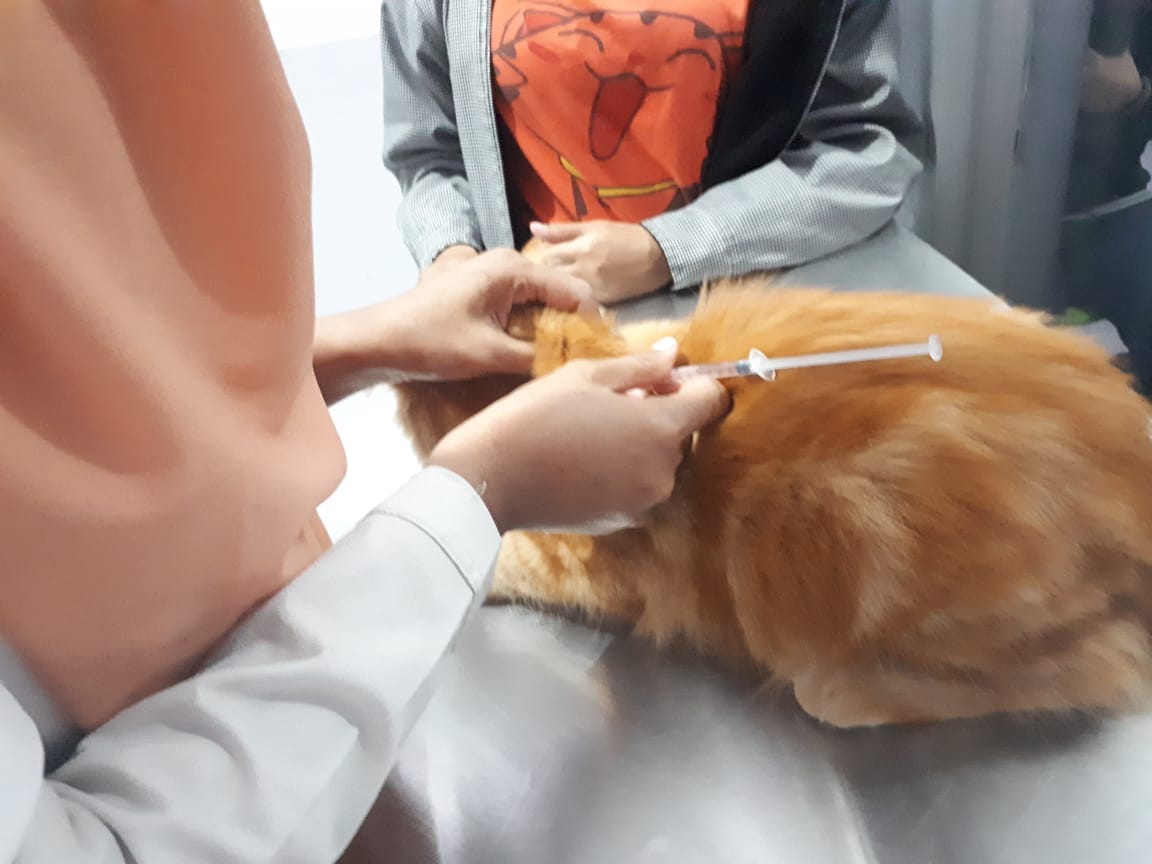
Figure 1. Vaccination of Chimo Cats (K and P Clinic Patients)
Before your cat is vaccinated, the veterinarian will carry out a thorough physical examination of the vaccinated cat, such as weighing, measuring temperature, examining ears and mouth. If the veterinarian says your cat is healthy, then let your cat be vaccinated. After vaccination, the veterinarian will give you a passport / vaccine book which you will need to bring every time your cat is vaccinated (see picture 2).

Figure 2. Passport / Vaccine Book (K and P Clinic Documentation)
Bibliography :
• WSAVA – Guideline For Vaccination Of Dogs and Cats. 2015. Written by M. J. Day, M. C. Horzinek, R. D. Schultz and R. A. Squires. Available in the Journal of Small Animal Practice. Volume 57.
• Feline Vaccination: Benefits and Risks. Published in the article American Association of Feline Practitionersand the Cornell Feline Health Center, Cornell University, College of Veterinary Medicine, Ithaca, New York 14853-6401.