
Hello pet lovers, this time K and P Clinic will discuss the problem of diarrhea in cats. Very often many clients come with complaints of diarrhea, therefore on this occasion we will discuss what diarrhea is, what causes diarrhea and how to treat diarrhea.
Let's start from the definition of diarrhea first. Diarrhea is a condition where the frequency of defecation increases and the consistency of the stool changes, tending to be watery or liquid, followed by increased intestinal peristalsis. Diarrhea is not a disease but is a symptom of disease. Diarrhea is classified into two categories, namely acute diarrhea and chronic diarrhea. Acute diarrhea usually occurs suddenly or occurs recently due to abnormalities in the frequency of excretion and fluid content of the feces. Acute diarrhea occurs due to an imbalance between absorption, secretion and intestinal peristalsis. Meanwhile, chronic diarrhea is a change in the frequency, consistency and amount of stool for more than three weeks or is a symptom of a disease recurring at a certain time. (Tilley and Smith, 2000)
Diarrhea can be caused by many pet lovers' diseases, including viruses, parasites, bacteria, or food factors that are not suitable for cats. Here I will discuss several diseases that have the clinical symptom of diarrhea.
One of the cases that often occurs in cats is feline panleukopenia, which is a disease caused by the parvo virus group. Symptoms include not wanting to eat, lethargy, fever, dehydration accompanied by diarrhea. In cases of this disease diarrhea will occur continuously. (Subronto, 2006) Diarrhea in cases of panleukopenia can cause death, pet lovers, so you must always be alert.
Next is Helminthiasis or what we usually know by another name: worms. There are many types of worms that can attack your beloved cat. Symptoms that arise in cases of worms are characterized by diarrhea which can also be accompanied by bloody diarrhea, both fresh blood and blood that has been mixed with feces. There are still other parasites besides worms that are also caused by prototozoa. One of the diseases that often occurs in cats from the protozoan group is coccidiosis which is caused by Emeira feline, Eimeria cati, and Isospora felis. Coccidiosis usually affects young animals. Infected kittens will show visible symptoms of diarrhea three days after infection, and blood in the feces will begin to appear on days 4 - 6. (Subronto, 2006)
These are some of the factors that cause diarrhea, pet lovers. How do we deal with our cat's diarrhea? OK, I'll answer the question because diarrhea is not always caused by bacteria, so don't always give antibiotics when your cat has diarrhea, an inappropriate dose can cause the cat to become resistant to antibiotics, it can even be an overdose, but instead of getting better, it's actually dangerous, right? Here, the admin gives an example of diarrhea caused by worms and there are worms in the feces.
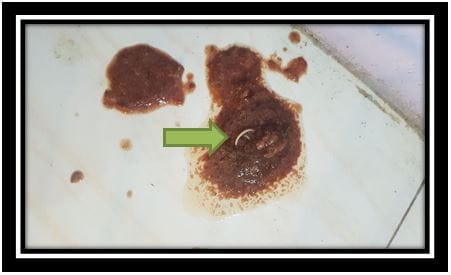
Diarrhea due to worms
How to treat diarrhea in cats
If your cat appears to have porridge-like stools more than 4 times a day and still wants to eat, the first aid you have to do is give ORS or diarrhea medicine that contains kaolin peptin.
If it continues within 24 hours with the consistency of the feces starting to become liquid and the cat starts not wanting to eat and drink, immediately take it to the nearest veterinarian, pet lovers, for further examination and the necessary action to be taken.
Remember, pet lovers, don't give medicine to your beloved cat carelessly, keep the cage, feed and drinking water clean for the kittens. Consult your trusted veterinarian first if you want to give medication. Hopefully this information can help you a little, pet lovers. Don't forget to check the health of your beloved pets...
Bibliography
Subronto., Parasitic and Microbial Infectious Diseases in Dogs and Cats, Gadjah Mada University Press, Yogyakarta, 2004.
Tilley, Larry Patric., and Smith, Francis W.K. Jr., The 5-Minute Veterinary Consult Canin and Feline second Edition, Lippincott Williams and Wilkins, USA, 2000.