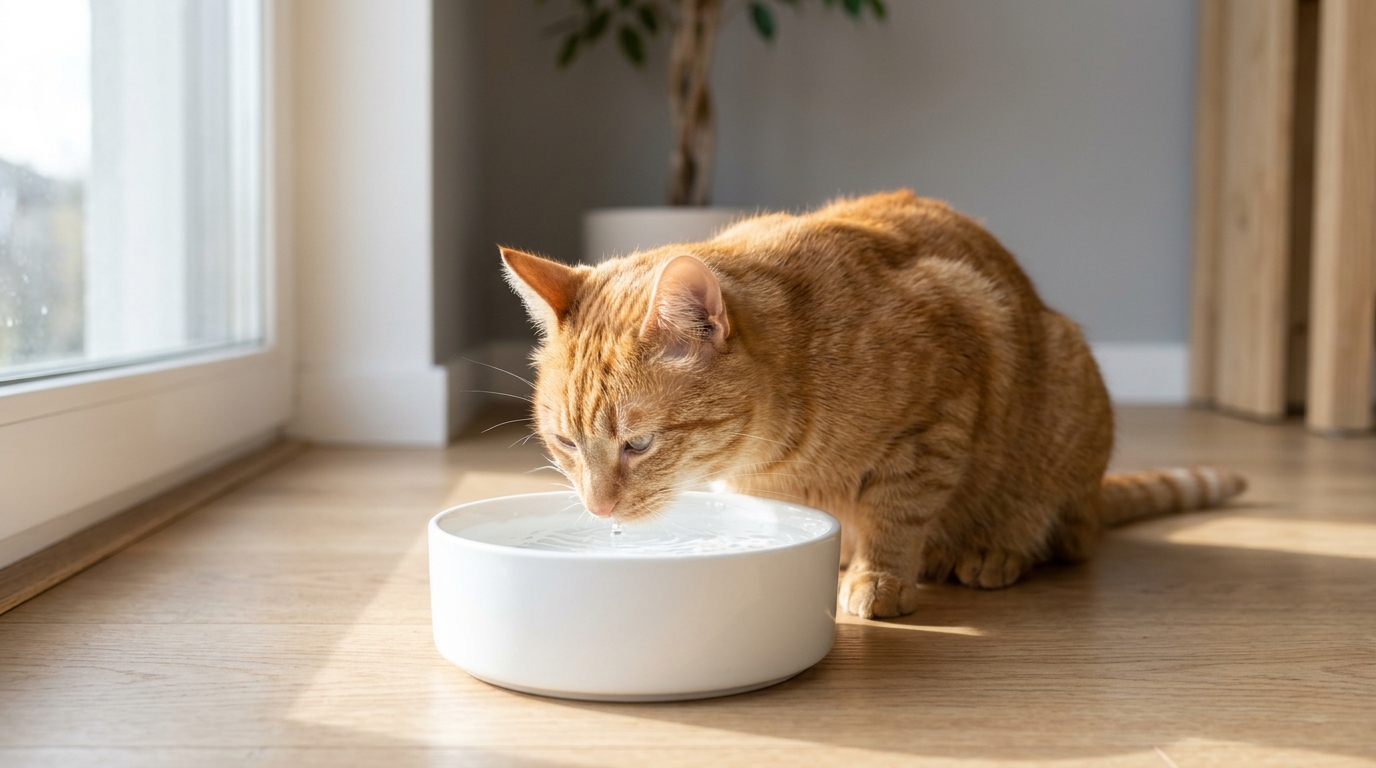
Illustration: Changes in a cat's drinking habits, appetite, and behavior can be early signals of organ problems.
Kidney disease and liver disorders are among the internal health problems that most commonly affect cats, especially as they progress from adulthood into their senior years. The biggest challenge is that both organs have considerable reserve capacity—meaning a cat can still appear to eat and play normally even as organ function begins to decline.
To act before the condition becomes critical, watch for these five early signs:
1. Drinking and Urinating More Often Than Usual
If the water bowl seems to empty faster and the clumps in the litter box become larger or more numerous each day, do not dismiss it as trivial. Increased thirst (polydipsia) and urination (polyuria) are classic signals that the kidneys are beginning to struggle to concentrate urine.
2. Reduced Appetite or Becoming Fussy About Food
A cat that usually eats eagerly but suddenly only sniffs its food and walks away, or only wants wet food, deserves attention. A buildup of metabolic waste toxins due to declining kidney function or liver inflammation often triggers mild nausea that makes a cat reluctant to eat.
3. Gradual Weight Loss
Small, gradual changes in weight often go unnoticed by owners who interact with their cats every day. You can check by feeling along the spine and ribs. If the bones feel more prominent while eating habits seem largely unchanged, a medical examination is strongly recommended.
4. Changes in Gum or Skin Color, or Breath Odor
• Strong bad breath: Breath that smells like ammonia or chemicals may indicate a buildup of urea in the blood due to kidney problems.
• Yellow discoloration (jaundice): If the insides of the ears, gums, or whites of the eyes begin to look yellow, this is a strong sign of a liver or bile duct problem requiring immediate attention.
5. Dull Coat, Hair Loss, and Spending More Time Alone
Cats that feel unwell internally tend to groom themselves less. Their coats may become greasy, dull, or tangled. They may also sleep more in a corner of the room and respond less when invited to play.
The Best Next Step: Kidney and Liver Panels
The physical signs above are not enough to confirm which organ is affected or how severe the problem is. The most accurate way to find out is through specific blood chemistry tests: a Kidney Panel and a Liver Panel. The earlier a problem is found, the greater your cat's chance of living comfortably with an appropriate special diet, fluid therapy, and supportive medication.
Have Your Cat Examined at K and P Clinic
Discuss any early signs you notice with the K and P Clinic veterinary team for fast, accurate Kidney Panel and Liver Panel laboratory testing.
Address: Jl. Mangkunegoro No.8, Darmo, Wonokromo District, Surabaya
Appointments and WhatsApp consultations: 0816-509-222 | kandpclinic.com