
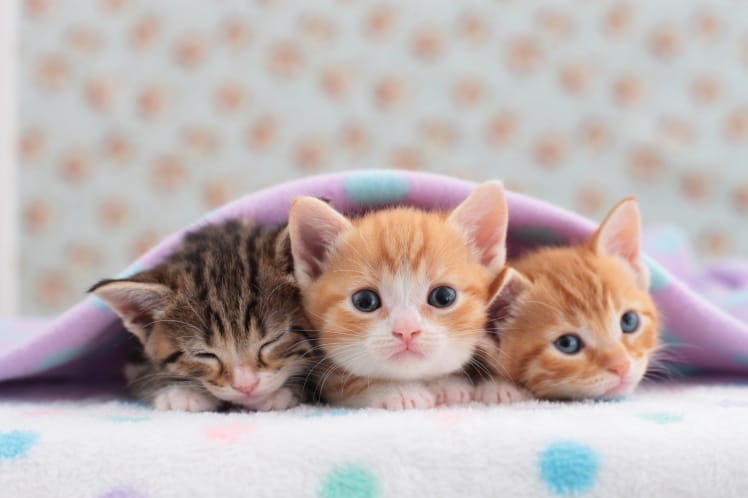
Hello, cat lovers! This time K and P Clinic would like to share tips on adopting a cat properly so that your new pet stays healthy.
Before Cat Lover's decides to get a cat, there are several things that must be considered, considered and prepared.
The preparations needed are:
• Make sure family members like cats or that no one in the family is allergic to cats. If it is confirmed that there are no problems then it is safe for cat lover's to adopt pet.
• Make sure you have the basic needs for keeping a cat, namely a sandbox, lumpy sand or scented sand, a sandpit, a place to eat & drink (make sure it's made from stainless steel or yesterday, so the drinking water doesn't smell), a comb and of course a cage...
• Try to adopt from a breeder.
• Adopt a cat according to your needs and desires. Before adopting, try to make observations at the cattery where you are going to adopt or if distance hinders you, you can ask in detail about things related to the cat you are going to adopt. The following are things you can ask the cattery about the cat you want to adopt:
• Age and gender (you can choose the cat's fur color according to your taste).
• What type of food the breeder gives to the cat you want to adopt.
• Make sure the cat you adopt has been dewormed and vaccinated (by asking the breeder for proof of the vaccine book).
• Make sure the cat you are going to adopt is completely healthy, free of fleas and fungal infections.
• If you are going to change your cat's feed. It is best not to directly replace the previous feed with new feed. The following is the percentage of replacement of old feed and new feed that will be given:
• First week: give food according to the previous food.
• Second week: give 70% old food and 30% new food.
• Third week: give 50% old food and 50% new food.
• Next, try 100% new food.
• Make sure the cat does not experience diarrhea or vomiting due to changing the feed it is giving.
• Once the cat is at home, introduce your cat to all family members. Adapt and invite him to play at any time so that he doesn't feel lonely because he is separated from his other cat friends while he is still in the cattery. If your cat has only been in your house for a few days, it's best not to bathe it straight away, let it get to know its new home.
• When selecting a cage, it is best to match the size of the cat. Try to choose a cage that he can move freely and is not cramped.
• If the cat you keep is released inside the house, make sure you provide a scratching pad (scratch paw) which can be purchased at the nearest pet shop.
• Educate your cat with love so that it develops a good character. Don't abuse your cat, because this will cause trauma and can leave scars for a long time.
• Establish good communication regarding your cat's problems with the breeder. Regularly check your animal's health at the nearest veterinarian.