
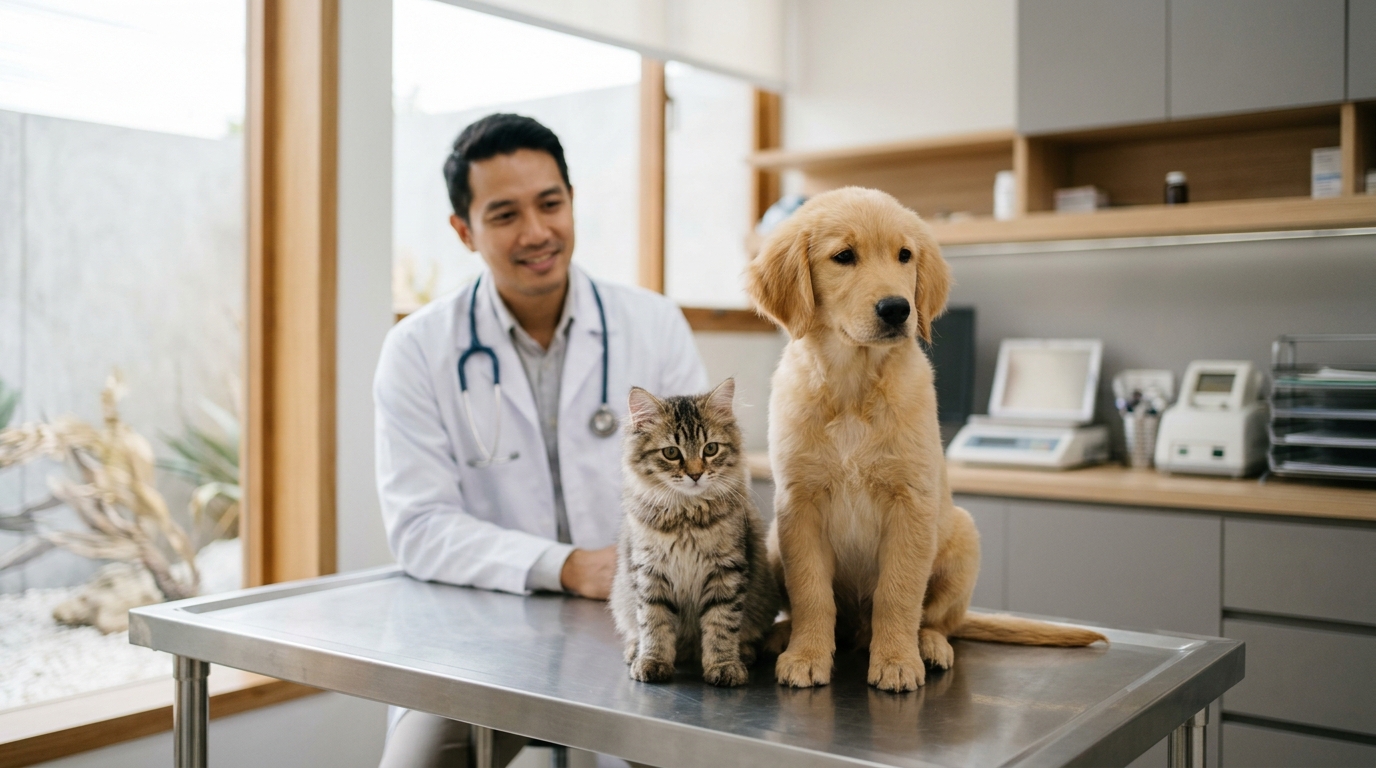
Illustration: Routine vaccination from an early age builds long-term immunity for dogs and cats.
Vaccination is a primary defense against various contagious and potentially fatal viral diseases in dogs and cats. Even if your pet always stays indoors, viruses can still enter on footwear, owners' clothing, or through the air. Understanding the appropriate vaccination schedule from an early age helps the animal's body develop immunity, or antibodies, optimally.
Cat Vaccination Schedule
Vaccination in kittens generally begins as natural antibodies received through their mother's milk start to decline:
Cat's age: 8–9 weeks
Vaccine type: Tricat (F3) / Tetracat (F4), Dose 1
Diseases prevented: Panleukopenia, rhinotracheitis, calicivirus, plus Chlamydia for F4
Cat's age: 12–13 weeks
Vaccine type: Tricat (F3) / Tetracat (F4), Dose 2 (booster)
Diseases prevented: Strengthened immunity against gastrointestinal and respiratory viruses
Cat's age: 16 weeks
Vaccine type: Rabies vaccine, and an F3/F4 booster if needed
Diseases prevented: Rabies virus
Cat's age: Adult (annually)
Vaccine type: Annual booster
Diseases prevented: F3/F4 and rabies, repeated once every year
Dog Vaccination Schedule
For puppies, the initial vaccination series consists of several stages so that protection develops fully:
Dog's age: 6–8 weeks
Vaccine type: Basic vaccine (DP / DHPPi), Dose 1
Diseases prevented: Distemper, parvovirus, hepatitis, parainfluenza
Dog's age: 10–12 weeks
Vaccine type: Follow-up vaccine (DHPPi + L), Dose 2
Diseases prevented: Additional protection against leptospirosis
Dog's age: 14–16 weeks
Vaccine type: Complete vaccine (DHPPi + L), Dose 3, plus rabies
Diseases prevented: Full protection against the main viruses and rabies
Dog's age: Adult (annually)
Vaccine type: Annual booster
Diseases prevented: Complete vaccine plus rabies once every year
Note: Your veterinarian may adjust the schedule above if your pet receives its first vaccination as an adult.
Requirements Before Your Pet Is Vaccinated
Vaccines work by training the immune system, so animals should be in good condition when receiving them. Make sure your pet meets the following requirements before coming to the clinic:
• Good Health: No fever, flu, coughing, diarrhea, vomiting, or lethargy.
• Free of Parasites: Ideally, deworming should have been given at least 1–2 weeks before vaccination, and there should be no severe flea infestation or fungal infection.
• Settled In: If your pet has just been adopted, allow 7–14 days to adjust to its new home first, to ensure that no disease is still in its incubation period.
What Should You Do After Vaccination?
After vaccination, it is normal for a pet to seem slightly sleepy or have a mildly reduced appetite for 1–2 days. Avoid bathing your pet for at least 5–7 days after vaccination so its condition does not deteriorate while the immune system is working to produce antibodies.
Schedule Your Pet's Vaccination at K and P Clinic
Ready to begin or continue your pet's vaccination schedule? Make sure the process is carried out by licensed veterinarians with vaccines stored to medical standards at K and P Clinic.
Address: Jl. Mangkunegoro No.8, Darmo, Wonokromo District, Surabaya
Appointments and WhatsApp consultations: 0816-509-222 | kandpclinic.com